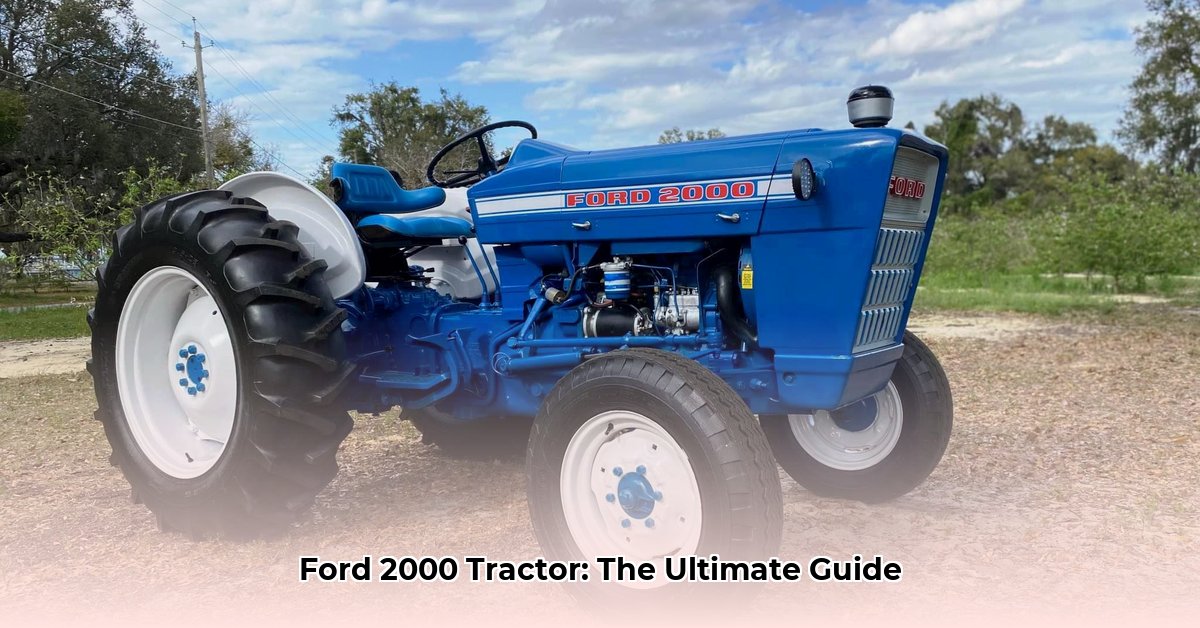
The Ford 2000, a three-cylinder workhorse produced from 1965 to 1975, remains a popular choice among collectors and small-scale farmers. This guide delves into its technical specifications, operational characteristics, and maintenance needs, providing a comprehensive resource for understanding this classic tractor. For more detailed information on specific models, check out this Ford serial number lookup.
Engine and Powertrain: The Heart of the Ford 2000
The Ford 2000 was equipped with a robust 2.6-liter, three-cylinder engine. Two versions were available: gasoline and diesel. While both shared the same displacement, horsepower varied considerably, typically ranging from 28 to 36 horsepower—modest by today's standards, but sufficient for the smaller farms and lighter tasks common during its era. This simplicity was a key design feature that prioritized reliability and ease of maintenance over sheer power.
Transmission: Unsynchronized and Simple
The Ford 2000 utilized an unsynchronized transmission, meaning that drivers needed to employ techniques like double-clutching (matching engine and gear speeds before shifting) to achieve smooth gear changes. This characteristic distinguishes this older machine from modern, synchronized tractors. Available gear configurations varied, typically offering four to twelve speeds depending on the specific model year and configuration. This straightforward transmission design reflected the era's emphasis on mechanical simplicity and ruggedness. Precise gear ratios for various models are readily available in original manuals or online dedicated forums.
Hydraulic System: Powering the Implements
The Ford 2000 featured a relatively simple open-center, two-valve hydraulic system with a capacity of roughly 6.3 gallons. This system provided the lift and movement necessary for various implements to be attached at the rear. While less powerful than modern systems, it was adequate for the tasks typically performed by this tractor on smaller farms during its operating period.
Attachments and Accessories: Expanding Versatility
The Ford 2000 was compatible with a range of implements. The popular Ford 771 and 772 front-end loaders significantly expanded its capabilities with tasks such as moving hay bales, moving materials etc. However, compatibility with other implements should always be verified before purchase. Careful consideration of the tractor's three-point hitch system and its overall condition is imperative to ensure safe and proper operation of any attached implements.
Operational Considerations: Strengths and Limitations
The Ford 2000's strength lies in its simplicity and reliability. Its modest horsepower was perfectly suited to smaller farms and tasks not requiring significant power. The lack of power steering, while possibly less convenient to drivers used to modern tractors, wasn't considered a major disadvantage in its day. But, its low horsepower significantly limits its application in modern, larger-scale agricultural operations. The unsynchronized transmission, while characteristic of its time, requires a certain level of skill and care in operation.
Maintenance and Repair: Ensuring Long-Term Function
Proper maintenance is essential for prolonging the Ford 2000's lifespan. Regular checks of fluid levels, belts, and connections are crucial. Given the tractor's age, sourcing parts can present challenges, so maintaining a strong working relationship with suppliers specializing in classic agricultural machinery is recommended. Online forums dedicated to vintage tractors are also an invaluable resource for obtaining parts and advice.
Conclusion: A Classic for Collectors and Farmers
The Ford 2000 tractor, with its characteristic three-cylinder engine and unsynchronized transmission, remains a compelling machine for collectors and small-scale farmers alike. While its power and features are modest compared to modern counterparts, its simplicity, reliability, and historical significance ensure its enduring appeal. Given the right applications and proper maintenance, this classic tractor can continue to provide valuable service for years to come.
Three Pivotal Points:
- The Ford 2000's robust three-cylinder engine, offered in gasoline or diesel versions, provided reliable power for its intended tasks.
- The unsynchronized transmission, while demanding more skill from the operator, represented a common design choice for tractors of its time.
- The tractor's compatibility with various implements, including front-end loaders, expanded its usefulness on small farms.